I’ve faced some really challenging times over the past few years – dealing with toxic situations, health problems, financial stress, and even depression. From all this, I’ve learned that getting through tough times isn’t just about staying positive or having blind faith. It’s about resilience. We all have that strength within us; we just need to find it.
The 13 ideas I’m about to share blend my own experiences with what I’ve found through research online.

1. FEEL YOUR FEELINGS
I know, I know – you’ve probably heard this a million times, but trust me, feeling your feelings is key when you’re going through tough times. We all try to shove them aside or act like they don’t exist, but honestly, that just doesn’t work.
Whether we admit it or not, those feelings are still hanging around, messing with our mind and body. I’ve found that the more I acknowledge my emotions, the less they control me. Here’s what works for me:
Step 1: Pinpoint the real feeling.
It’s easy to go with the obvious emotion, but it might not be the root. Here’s how I dig deeper:
- Free writing: I write non-stop for 15 minutes, asking, “Why does this bother me?” and keep going until I get to the core.
- Identify patterns: I notice my “go-to” emotions, like anger or feeling abandoned. Am I really feeling that now, or is it just a default response?
- Use an emotions wheel: It helps uncover the more complex feelings. I created this simple emotional pinwheel that’s rainbow colored accordingly.
Step 2: Feel the feeling.
Once I know what I’m feeling, I actually sit with it. For me, this might mean crying, blogging, or even punching a pillow.
Step 3: Do it regularly, but set limits.
I give myself 15-30 minutes to process, but then I move on. It’s easy to get stuck in it all day if I’m not careful. If feelings pop up randomly, I acknowledge them and then focus on something that matters to me.
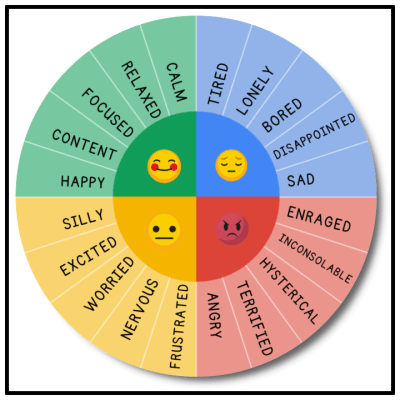
The Emotion Wheel is a circular chart that organizes emotions into primary, secondary and tertiary categories. It helps identify and understand the nuances of our emotional states, thus offering a clearer view of what we are feeling.
2. LEAN INTO YOUR VALUES
I’ve found that one of the best ways to feel happy and fulfilled is by letting my values guide my actions. After allowing myself to feel my emotions, taking action based on my values has helped me get through tough times.
Here’s how I do it. I start by identifying my core values – just one or two, to keep it simple. Once I have these, I make a list of actions I can take in 5, 10, 30, or 60 minutes that align with these values. I keep this list handy for quick reference. Whenever I feel stuck, I check the list and choose an action based on the time I have. I don’t overthink it; I just do it. The goal is to live according to my values, not just to feel better. If it does make me feel better, that’s a nice bonus.
3. LEARN TO LIVE IN DUALITY
Learning to live in duality has been one of the toughest lessons for me, but also one of the most important. Life isn’t about choosing this or that – it’s about accepting this and that.
When I finally accepted this, I found a lot more peace. For example:
~ I can feel incredibly sad and still be incredibly grateful.
~ I can love someone deeply and be really angry at them.
~ I can grieve while also feeling joy.
~ I can strive to live by my values but still be unproductive at times.
Once I allowed myself to feel everything fully, it became easier to process those emotions. When I tried to suppress feelings, like telling myself I shouldn’t be sad because I have so much to be thankful for, it just created inner conflict.
Our brains want balance. Ignoring one feeling only stirs up more conflict. There’s space for all emotions – they can all exist together.
When I embraced duality, I became more open to joy, and less trapped in black-and-white thinking.

4. ESTABLISH A DRIVER AND A PASSENGER
I’ve realized we can’t just wish away our negative thoughts and feelings. Even after we’ve taken time to face them and done something meaningful, those feelings might still linger. And you know what? That’s totally fine. You can’t just will away a feeling, just like you can’t avoid thinking about a purple elephant when someone says not to. The more you try, the more it sticks.
Yes, I’ve learned to coexist with those emotions. A visual that works for me is thinking of myself in a car. My negative emotions are there, too, but I’m in the driver’s seat. I control the journey, and my emotions? They’re just passengers. They’ll come along, but they don’t get to steer.
At first, I had to literally picture this: Telling my emotions to stop backseat driving! I make the decisions while the feelings ride along. I’m not saying I can’t grieve. I’m saying I can grieve and still find gratitude.
Here’s a hack: When it’s hard to find something to be grateful for, just start with one thing. Our brains love easy wins. If I make it simple, my brain starts thinking life isn’t so bad after all.
5. GET INTO A FLOW STATE OF GRATITUDE
I’ve discovered that while keeping a gratitude journal is great, the real magic happens when you genuinely feel it deep down. It took me a bit to figure this out, but once I did, it was a total game changer.
The trick is finding something that makes you lose track of time and fills you with appreciation. It’s that “flow state” where everything just clicks. This isn’t just about doing things you enjoy. I love reading, but it doesn’t quite get me there.
For me, walking in nature, photography, or being outdoors does the trick. I have had a few different hobbies like this, so once I found what worked, I started setting aside regular time for them. When I’m in that moment, I focus on those good vibes and thank the universe for them.
Feeling gratitude this way, rather than just listing things, has really made a huge difference for me.

6. BE SUPER PICKY ABOUT WHAT YOU LET INTO YOUR SPACE
I’ve learned the hard way that whomever I surround myself has a huge impact on my mood, attitude, and beliefs.
Setting boundaries with who and what enters my mental and physical space is always important, but it’s especially crucial when I’m going through tough times.
This is when I really start curating who I interact with, who I listen to, and who I spend time with – even if it’s just on social media.
Setting boundaries can be tough, but it’s crucial for maintaining well-being.
I focus on how I feel after interacting with someone or consuming their content. If it drains me and they aren’t vital, I’ll step back until I’m more grounded.
For those who are important but still impact me negatively, I limit our interactions, choose the best times to connect, and remind myself that their issues don’t need to become my own. Boundaries help keep my emotional space healthy and balanced. Finally, I add some positive content – an uplifting video or podcast – to keep my space inspiring.
7. COMMUNICATE WHAT YOU NEED AND ASK FOR HELP
Let’s be honest – none of us can do it all alone. Healthy relationships are about give and take. I’ve always been there for others, but asking for help hasn’t been my strong suit. I’ve noticed this sometimes keeps my relationships from growing as deep as I’d like.
I’ve learned that before asking for help, I need to figure out what I actually need. It’s tough when I don’t know what I need and get frustrated when things don’t go as planned. Now, I try to pinpoint what I need and communicate it clearly.

8. TAKE CONTROL AND LET THE REST GO
I get it – wanting to feel in control is totally natural. When life gets tough, feeling powerless can be one of the hardest parts. While you might not be able to control everything, there are definitely some things you can. Focusing on those can help you feel a lot less frazzled.
So, here’s what I do: I pick three things I can control right now and stick to them. It might be starting a new daily ritual or sticking to a routine. Maybe it’s something related to what I’m dealing with.
The key is to know what’s actually within my control and what’s not. If it’s something unchangeable, like gravity, worrying about it is pointless – so just let it go. If there’s something I can change, I’ll channel my energy there. Doing so makes me feel more in control and helps reduce my stress.
9. TALK ABOUT IT CONSTRUCTIVELY
Talking to others when things get tough can really help, but how we talk about our problems matters a lot. If we’re always negative, it just keeps us stuck in that mindset. Life is shaped by what we see and say.
That said, venting can be a lifesaver! It’s a great way to unload and deal with your feelings. Just find a balance. When you vent, try setting a time limit – mine’s usually 15-30 minutes. Vent as much as you need, but when time’s up, shift gears to something more positive. Talk about ways to solve the problem or find a silver lining.
At first, it might feel weird to cut yourself off, but with practice, you’ll find that’s all you need to vent, and you’ll be ready to focus on the positive. If someone can’t help you move to a constructive place, maybe they’re not the best person to vent to. Remember, venting is fine, but balance is key.

10. UP YOUR SELF CARE WHEN GETTING THROUGH HARD TIMES.
When times get tough, self-care often takes a backseat. Maybe it feels like there’s no time, or you feel guilty, or you’re just too overwhelmed. Yet here’s the thing: Self-care is essential. It’s what keeps us strong and moving forward.
Find small moments in your day for at least a quick 5-minute break – it can make a difference. Here are some easy self-care tips I abide by:
- Eat a nutritious meal at least twice a day.
- Chair-dance like no one’s watching during my radio program.
- Take a quick 5-minute walk – taking my youngest son to school.
- Breathe deeply for 4 seconds in and out, particularly on the left and right stroke whilst window cleaning.
- Stretching my legs and arms regularly throughout my work day.
- But mostly keeping up with my blog.
Think of self-care as an investment in your future well-being. Make it a priority now, and remember, scrolling through social media or gaming doesn’t count!
11. HOW IS THIS HAPPENING TO ME?
I’ve found that shifting my mindset from “this is happening to me” to “this is happening for me” can make a big difference. It’s a small change in language, but it shifts how I view things entirely.
- “This is happening to me” – Feels like I’m stuck in a rut, like I’m being punished or that nothing ever goes right.
- “This is happening for me” – Opens up the idea that there’s something to learn or benefit from, even if I don’t see it right now.
Even if it’s hard to believe this situation could work in my favor, I ask myself how it might be beneficial. Our brains like to solve puzzles, so asking “why is this for me” can spark new ideas. It’s a creative exercise, and by pushing through the initial, obvious answers, I often find deeper, more inventive insights by the time I determine 20 reasons.
12. FOCUS ON WHAT’S REAL AND PRESENT
It’s so easy to get lost in worries about the future, especially when things are tough. But most of our pain and suffering come from these future worries. Whenever you catch yourself stressing about what might happen, try to gently bring your focus back to right now.
Ask yourself: What’s going on in this moment? Am I safe and healthy right now? What’s good about this moment? For example, as you read this, you can be grateful for the internet and all the free resources at our fingertips.
Try to stay present and make the most of it.
13. CLEAN UP YOUR VOCABULARY
The words we use really matter. They shape our mindset and outlook on life.
Think about it – how often have you and someone else experienced the same event but saw it in totally different ways? It’s all about what’s going on in our heads, not just what’s happening around us.
If you clean up your language, both when talking to yourself and others, it can drastically change how you feel. For example:
~ Instead of saying, “I HAVE to do this,” try “I GET to do this.”
~ Replace “I’m being FORCED to” with “I CHOOSE to” (Remember, you’re never truly forced; it’s always a choice.)
~ Switch “This is happening TO me” to “This is happening FOR me.”
MY FINAL MESSAGE
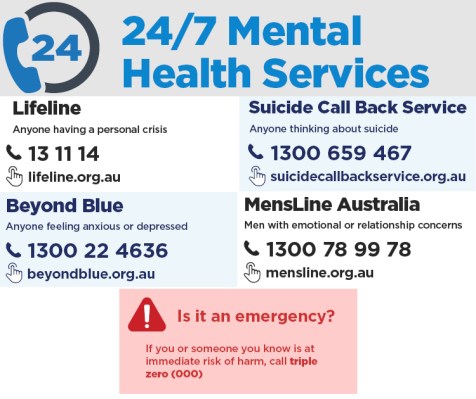
I really hope you’ve read some useful tools here that you could put into action. Remember, seeing a mental health professional can be incredibly helpful. You don’t have to tackle this alone. Resilience also means reaching out for support when you need it.
Discover more from Stephen Mitchell | Life Lessons, Creativity & Personal Growth
Subscribe to get the latest posts sent to your email.
 Stephen Mitchell | Life Lessons, Creativity & Personal Growth
[…] with XXY, and alone now, has taught me that my brain is wired differently to most – yet I…
[…] Living with XXY, and alone now, has taught me that my brain is wired differently to most – yet…