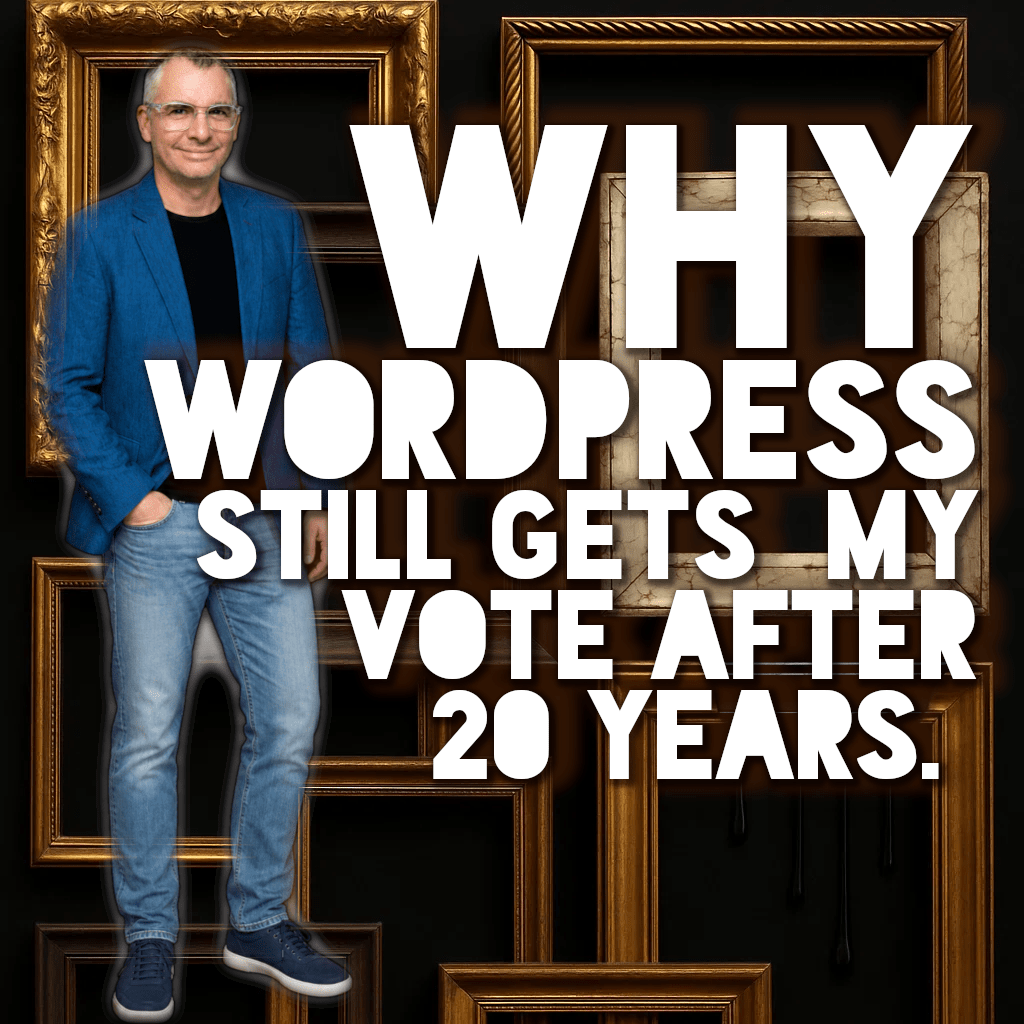
I’ve been using WordPress for nearly 20 years.
During that time I’ve redesigned my own blog more times than I care to admit, tinkered with themes, broken the odd thing, fixed it again, and generally learned by doing. Even after all these years, I’d still be the first to admit I haven’t explored every corner of WordPress. It’s simply grown too much for any one person to know it all.
Despite that, if someone asked today which platform I’d recommend, my answer would still be WordPress.
What I’ve also learned is that WordPress doesn’t suit everyone. Some people want something they can set up over a cuppa on a Sunday afternoon. Others want a website that can grow with them for years. Neither approach is wrong; they’re just different. So, rather than trying to convince you, here’s an honest look at the pros and cons of WordPress in 2026.
The Pros Of WordPress
You Own Your Website
One of the biggest advantages of WordPress is something you probably won’t appreciate until years later: ownership. Your website is yours. Not your web designer’s nor your hosting company’s.
If you ever decide to move hosts, redesign the site or hire someone new to work on it, you can. You’re not packing up the house and leaving half the furniture behind. It might not seem important when your website is only a few pages long.
Five years down the track, when your business has grown and your website has grown with it, you’ll probably be glad you chose a platform that gave you that freedom.
Built To Grow With Your Business
Most websites aren’t really finished the day they’re launched. They’re more like gardens. You plant them, look after them, pull out the occasional weed, and every now and then add something new. That’s where WordPress really shines.
Whether you decide to start writing a blog, improve your Google rankings, add an online shop, take bookings or build something completely custom, it grows with you instead of getting in your way. Your website shouldn’t become something you outgrow. It should be something that grows alongside your business.
Excellent For Search Engine Optimisation
A beautiful website isn’t much use if nobody ever finds it. WordPress gives you excellent control over the things search engines care about, including:
- page structure
- URLs
- headings
- metadata
- internal links
- website speed (with quality hosting)
There are also excellent SEO plugins that make the technical side much easier to understand. You don’t need to become an SEO expert overnight. You simply need the right tools and a willingness to keep learning.
Cost-Effective Over The Long Term
People sometimes assume WordPress is expensive. In reality, most of the investment happens at the beginning. Once your website is up and running, ongoing costs are usually limited to:
- website hosting
- domain name renewal
- occasional premium plugins
- routine maintenance
Because WordPress itself is open source, there are no ongoing licence fees simply to keep using the software. Like buying a decent set of tools, it may cost a little more upfront, but if you look after it, it’ll serve you well for years.
A Huge Community Behind It
One reason WordPress has lasted this long is that it’s never relied on one company to keep it alive. Thousands of developers around the world continually improve the software, fix bugs, create plugins, design themes and strengthen security. That means if you ever get stuck, chances are someone else has already asked the same question – and someone else has already answered it.
Almost Endlessly Customisable
One of the reasons I’ve stayed with WordPress for so long is that it rarely tells me, “Sorry, you can’t do that.”
~ Need a simple blog? Easy.
~ Need a business website? No problem.
~ Need bookings, memberships, online courses or something completely unique? There’s a good chance WordPress can handle that too.
It bends remarkably well without breaking.
The Cons Of WordPress
There’s A Learning Curve
I’ll be honest – WordPress isn’t something you completely master over a weekend. There are new ideas to get your head around, including:
- hosting
- themes
- plugins
- updates
- backups
- patterns
It can feel a little overwhelming at first. The good news is that most people only need to learn the basics before they become comfortable using it.
Websites Need Looking After
One thing catches some people by surprise: Websites need maintenance. A WordPress site isn’t like buying a fridge and expecting it to quietly do its job for twenty years. Every so often it needs updates, backups and a little housekeeping. Thankfully, much of this can be automated these days. It’s less about being technical and more about being organised.
Security Depends On Good Habits
People sometimes say WordPress isn’t secure. I’d argue that’s a bit like saying houses aren’t secure. A house with broken locks, open windows and no alarm is always going to be easier to break into. The same applies to websites.
Most security problems happen because websites aren’t maintained properly. Strong passwords, regular updates, reliable hosting, backups and sensible security measures go a very long way towards keeping your site safe.
Good Hosting Is Worth Paying For
Not all hosting is created equal.
~ Cheap hosting often sounds attractive – until your website slows to a crawl, disappears for an afternoon or leaves you chasing technical support that never quite arrives.
~ Reliable hosting generally gives you faster loading speeds, automatic backups, stronger security and people you can actually contact when something goes wrong.
Sometimes the cheapest option ends up being the most expensive.
Don’t Go Crazy With Plugins
Plugins are one of WordPress’s greatest strengths. They’re also one of the easiest ways to create problems. Think of them like power tools. The right one saves you hours of work. Twenty of them scattered around the shed just make life harder.
One of the biggest mistakes beginners make is installing every plugin that promises to do something clever. Before long the website slows down, things start arguing with each other, and you’re left wondering what happened.
These days I’m far more selective. If a plugin genuinely solves a problem, great. If it doesn’t, it doesn’t stay.
It’s Not Meant To Store Sensitive Data
WordPress is brilliant for websites. It’s less brilliant as a secure storage system for highly sensitive information such as medical records or financial data. Those jobs are better left to systems specifically designed for them. Your website can connect to those services without trying to become one itself.
So, Is WordPress Still Worth Choosing?
Absolutely. After nearly 25 years, I’m still using it. Not because I enjoy change for the sake of change, but because WordPress continues to offer the right balance of flexibility, ownership and room to grow. Yet, yes, I also use SubStack.

This was written by me, with ChatGPT used solely as an assistant-editor to improve clarity, grammar and readability. The articles, opinions, poetry, photography, illustrations & humor shared on my blog and related websites are my own.

Discover more from Stephen Mitchell | Life Lessons, Creativity & Personal Growth
Subscribe to get the latest posts sent to your email.


Have a differing view or opinion, or agree wholeheartedly? Your response is welcomed!