First off, let me explain why I’m sharing this with you. This goes way back – to the days of IRC, AOL, and forums, where online identities were rarely what they seemed. I spent countless hours diving into IRC (Internet Relay Chat) and chatting on forums with thousands of interesting characters.

During that time, I picked up a lot about coding and behind-the-scenes tricks to spot bots – and quickly boot them off the server.
I saw servers overrun with bots, sometimes gradually, sometimes in a sudden flood that would crash the network. Switching to another server didn’t always help; the bots often followed. It was eerie, but it taught me heaps about spotting patterns and staying alert.
Those early experiences made me hyper-aware of many red flags in online interactions today. The internet is a fascinating place, but it’s not without its pitfalls. With all that in mind, I felt compelled to write this post to help you all navigate the digital minefield.
It’s that time of year again: Fake social media accounts are popping up everywhere, yet particularly on Facebook.
These accounts might look real at first glance, but dig a little deeper and you’ll find the cracks. Often they feature stolen photos, vague personal details, and suspiciously generic posts designed to lure you in.

Here’s how it usually works:
- Minimal Personal Info:
The details they provide are just enough to sound believable but lack depth. You’ll find no connections to real events, locations, or family ties that would make their profile seem authentic. - Fake Photos, Real Problems:
The profile might showcase a smiling face or even an elaborate life story, but the images are often swiped from elsewhere—sometimes from real people’s accounts or stock photo libraries. - Scripted Interactions:
They rarely engage like a real person, they post a request for information about how to improve their holiday near your town, or say they have property for sale . Yet their responses to your comments or messages often feel robotic, as many use AI tools to send scripted replies that lack personal touch or context. Some simply don’t respond, and here’s why:
Why do they Exist?
The purpose of these accounts isn’t to make friends – it’s to gather information. They might try to scam you, steal your identity, or spread malware through links. Sometimes, they’re run by individuals; other times, they’re part of larger networks aiming to harvest data for fraudulent activities.
How to Protect Yourself
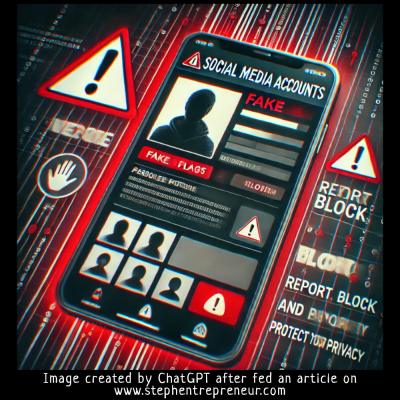
- Be Skeptical: If an account seems off – low-quality photos, limited interaction, or vague personal details –> trust your gut.
- Don’t Engage: Avoid replying to suspicious accounts or clicking on links they share.
- Report and Block: Social media platforms have tools to report fake profiles. Use them.
- Privacy Matters: Review your account settings to limit what strangers can see.
Basically: Don’t Take The Bait!
Engaging with fake accounts, even out of curiosity, can be risky. Responding to their messages or comments gives them an opening to gather more information about you, like your habits, interests, or even personal details you might casually mention.
Worse still, clicking on links they share could lead to phishing scams or malware. Remember, these accounts thrive on interaction to achieve their goals—don’t give them the satisfaction.
Fake accounts are be a modern nuisance, yet with a bit of vigilance, you can steer clear. Remember: not everyone who slides into your DMs is who they seem. Stay sharp!
The safest move?
~~ IGNORE, REPORT, AND BLOCK ~~
Keep your digital footprint secure by not giving scammers any fuel for their schemes.
As we wrap up the year, I want to thank you for taking the time to read this. Take heed of the advice I’ve shared – learning from my trials, avoiding the traps, and keeping your online world a bit safer.
Here’s to 2025 being a fresh start, a chance to grow, and plenty of opportunities to make it your best year yet. Stay safe out there, both online and off.
Discover more from The Entrepreneurial Life of Stephen Mitchell
Subscribe to get the latest posts sent to your email.
 The Entrepreneurial Life of Stephen Mitchell
Excellent! Thanks 😎✅
LikeLiked by 1 person
Thanks Lee. As always, I an happy to provide information that will hopefully change or help other online users. Here’s hoping this helps those people easily fooled by scams and bots!
LikeLike
This post deserves more attention!
LikeLike